Why You Can Never Pin an Exact Date
Nepal's major festivals follow lunar calendars — the Bikram Sambat calendar for most Hindu festivals, and the Tibetan lunar calendar for Sherpa and Buddhist festivals in the high mountains — so their Gregorian dates shift from year to year, sometimes by several weeks . Any calendar you see quoted for a specific year's Dashain or Mani Rimtu dates is only accurate for that one year — worth remembering if a festival is a reason you are timing your trip.
Festivals You Might Catch in the Mountains
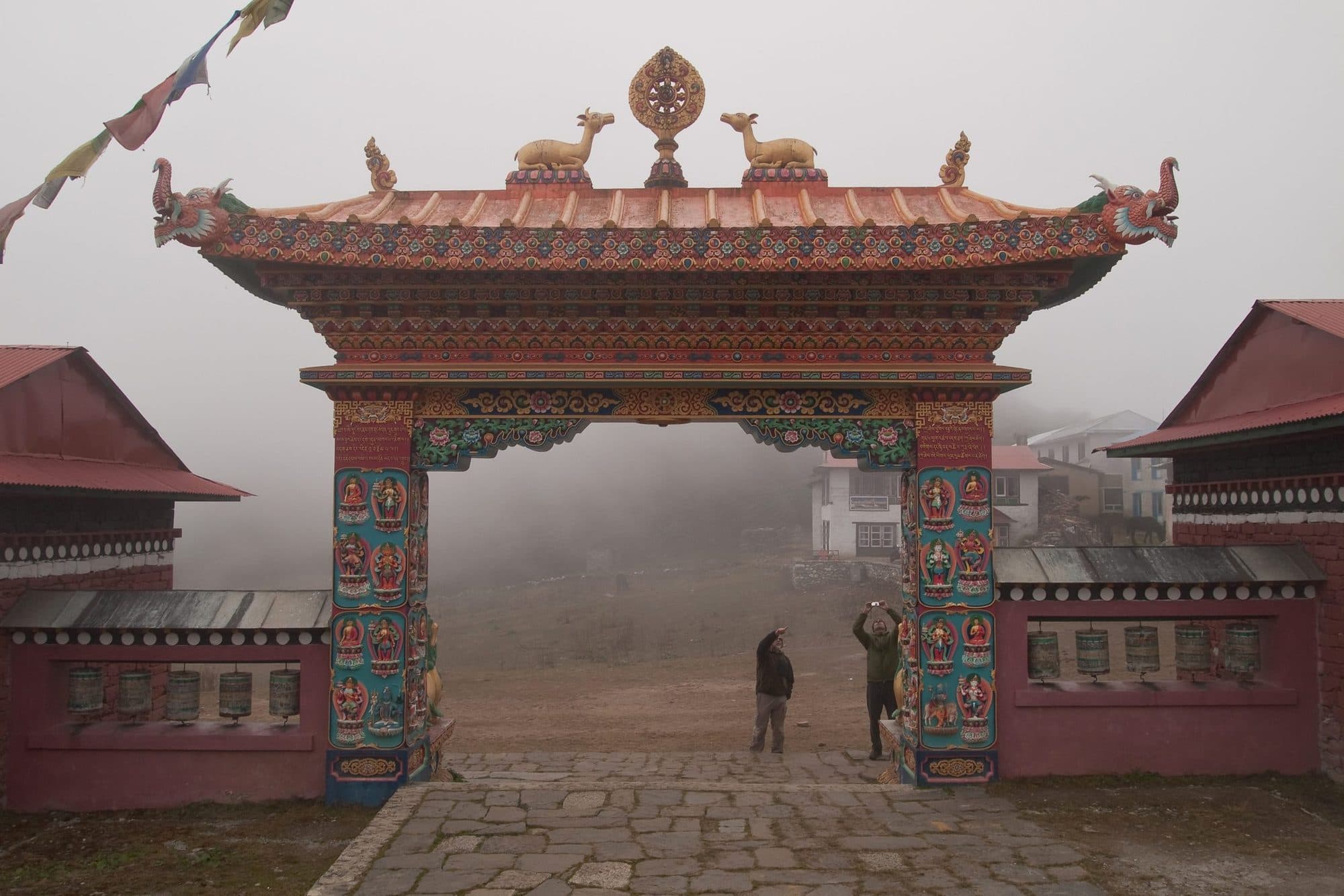
Dashain, Nepal's biggest Hindu festival, usually falls in the autumn trekking season and centres on family reunions, tika blessings and kite flying — you will notice bamboo swings (ping) appearing in village squares and lighter foot traffic on the trail as guides and porters travel home. Tihar follows soon after, a multi-day festival of lights, with distinct days honouring crows, dogs, cows and, on the final day, the bond between brothers and sisters. Up in the Khumbu, keep an eye out for Mani Rimdu, a major Sherpa Buddhist festival held at Tengboche Monastery featuring masked ritual dances — a rare and genuinely moving thing to witness if your itinerary happens to align with it. Losar, the Tibetan and Sherpa new year, brings its own celebrations to villages across the high Khumbu, Mustang and Dolpo regions, usually in the depths of winter. And down in the Kathmandu Valley, Indra Jatra fills the streets of the old city with masked dances and the chariot procession of the Kumari, the living goddess.
Being a Respectful Guest
If your trek does coincide with a festival, treat it as a privilege, not a photo opportunity. Ask before photographing rituals, dances or private family moments; follow your guide's lead on where visitors are welcome and where they are not; and understand that a monastery courtyard mid-ceremony is a living religious space, not a performance staged for trekkers. Festivals are also a logistical factor worth planning around — accommodation and transport can be busier, and some guides and porters will want time with their own families — so if a festival lines up with your dates, it is worth discussing with your operator well in advance.
A Few More Worth Knowing
Two further festivals are worth having on your radar depending on where and when you travel. Buddha Jayanti, marking the birth of the Buddha, is widely observed at Buddhist sites across the country — Boudhanath and Lumbini in particular see large gatherings — and, like the others, follows the lunar calendar rather than a fixed Gregorian date. Holi, the spring festival of colour, is celebrated mainly in Kathmandu and the lower hills rather than in the high mountains, and involves exactly what it sounds like: coloured powder and water thrown enthusiastically in the streets, timed to the Phalgun Purnima full moon each year. None of these festivals exist for trekkers — they are living community events that happen to coincide, sometimes, with your trip — and that is exactly what makes glimpsing one so memorable.