Dal Bhat: The Fuel That Powers the Himalaya
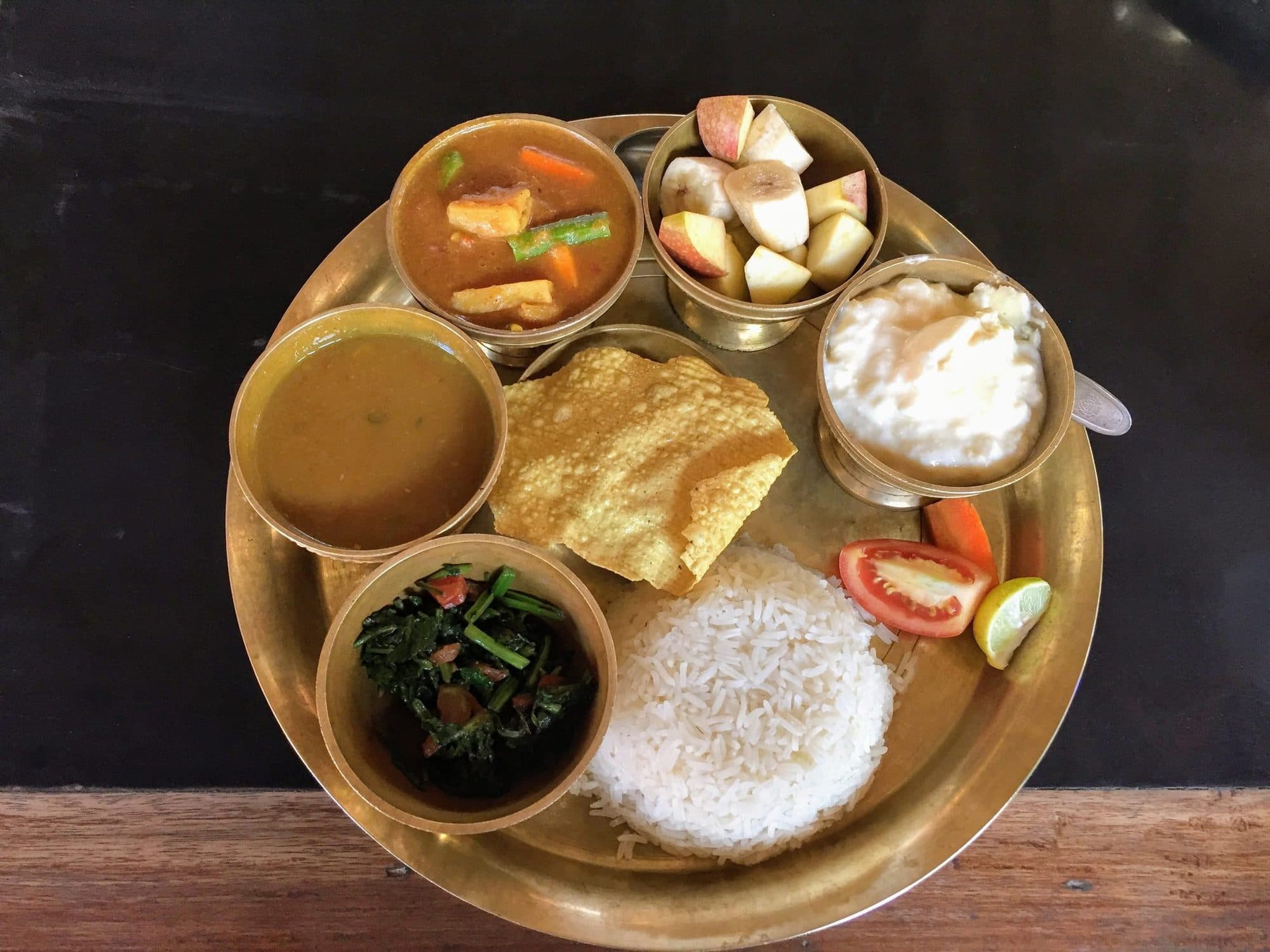
If there is one dish that defines trekking in Nepal, it is dal bhat — a plate of steamed rice, lentil soup, a vegetable curry, sauteed greens and a pickle or two, usually with unlimited refills. It is the meal Nepali porters and guides eat almost daily on the trail, which is where the well-worn guide's joke “Dal Bhat Power, 24 Hour” comes from — more trail folklore and morale-boosting mantra than a nutritional claim, though it is genuinely a well-balanced, carbohydrate-rich plate that suits long walking days. Expect it on almost every teahouse menu, usually as the best-value option on the board.
From Momos to Pancakes: How Teahouse Menus Evolved
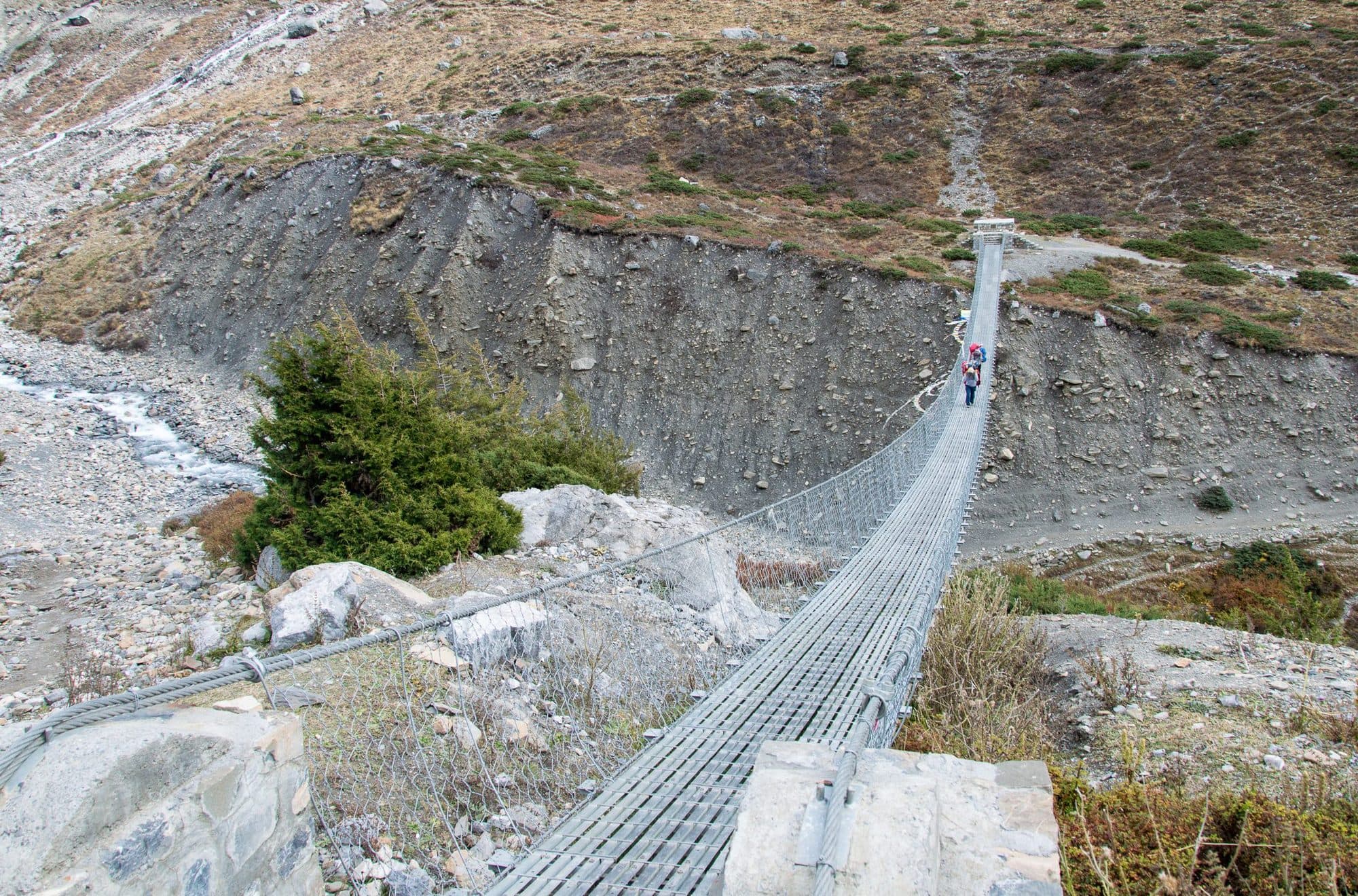
Alongside dal bhat, you will find dishes shaped by Nepal's Tibetan-influenced hill culture — thukpa (noodle soup), momos (steamed or fried dumplings), and Tibetan bread — as well as a whole second menu that has grown up specifically to serve international trekkers: pancakes, porridge, fried noodles, and even passable pizza at some of the bigger lodges in the Everest and Annapurna regions. Prices climb steadily with altitude, which makes sense once you consider that every ingredient not grown locally has arrived by porter, mule train or yak — there is no road, so there is no cheap delivery.
The Garlic Soup Legend (and Other Trail Folklore)
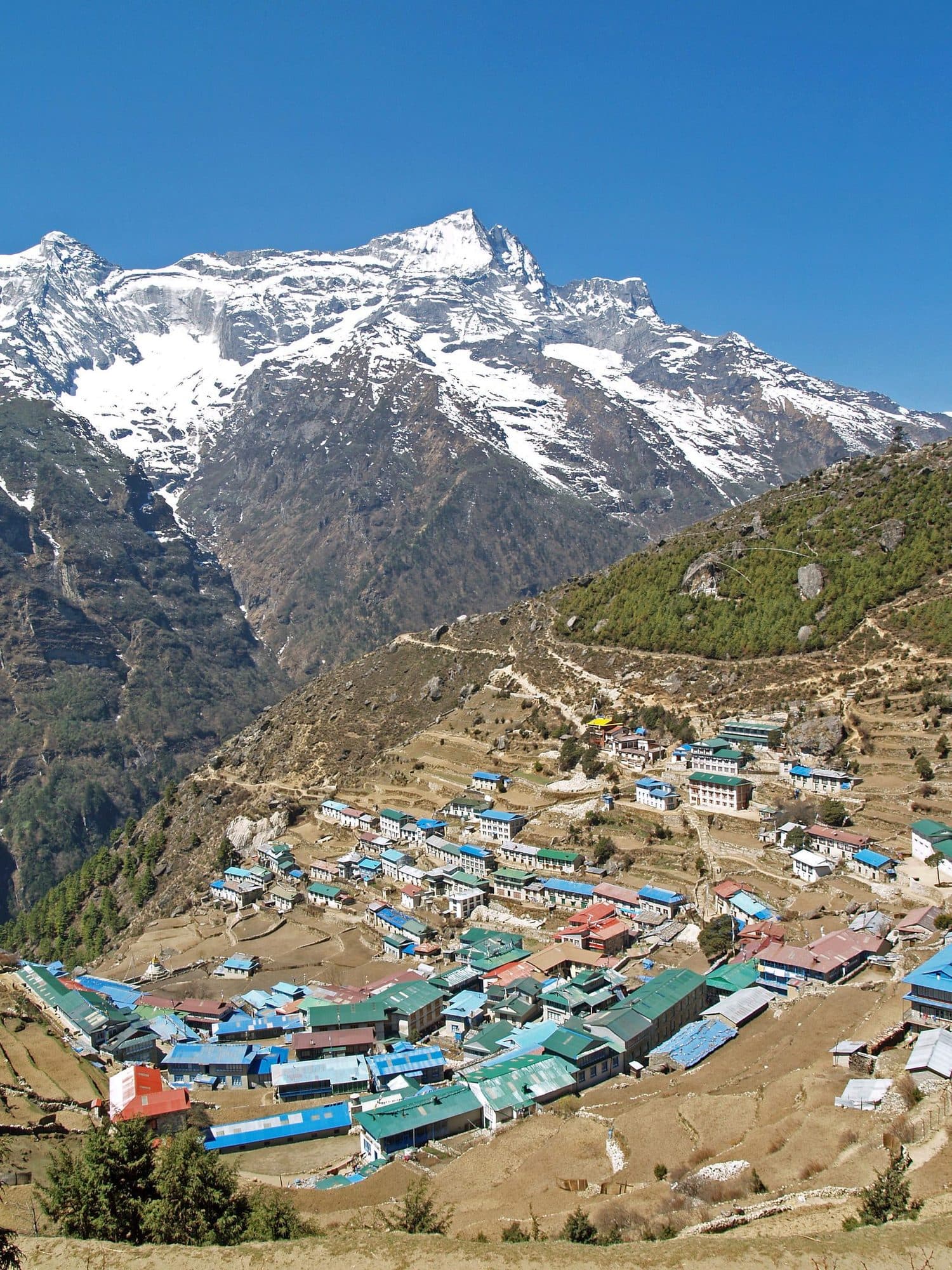
Ask around at altitude and someone will insist that garlic soup helps with acclimatization — it is a beloved fixture on teahouse menus above Namche Bazaar, and trekkers do swear by it. It is worth being clear, though: this is trail folklore and comfort food, not a clinically proven treatment for altitude sickness . It is warm, it is garlicky, and it is a lovely ritual at 4,000 metres — just do not let it replace proper acclimatization habits. One practical, genuinely useful tip from local guides: be a little cautious with meat dishes the higher you go, simply because keeping meat fresh gets harder the further it travels from the road-head — vegetarian dal bhat is rarely the wrong choice on the trail.
Regional Flavours: Thakali Cuisine on the Annapurna Circuit
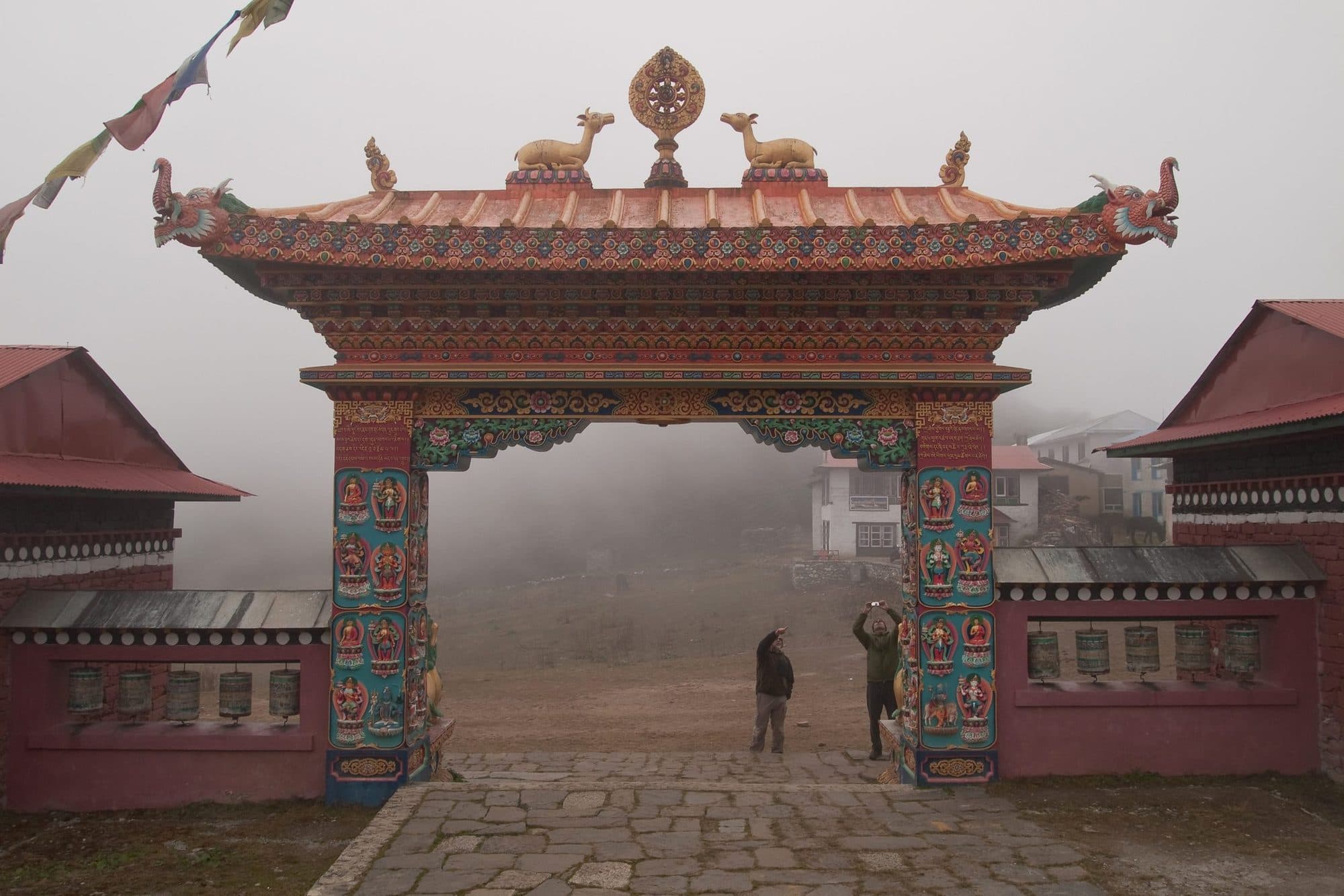
Food on the trail is not one-size-fits-all across Nepal — each region has its own culinary identity layered on top of the standard teahouse menu. Along the Annapurna Circuit and the Kali Gandaki valley, look out for Thakali cuisine, cooked by the Thakali people of the Mustang region and widely considered one of Nepal's most refined regional food traditions: a Thakali-style dal bhat set typically arrives with more side dishes than the standard version, often including gundruk (fermented leafy greens), a spicier lentil preparation, and sometimes a meat curry alongside the usual vegetables. In the Khumbu, by contrast, Sherpa and Tibetan influences dominate — expect more thukpa, momos and butter tea the higher and further east you trek. In Langtang, closer still to the Tibetan border, the food leans further toward this same hearty, high-altitude style, with hot soups and starchy staples doing most of the work of keeping trekkers fuelled. Trying the regional variations rather than sticking to the same order every night is one of the simple, genuine pleasures of a longer trek.